BEng Biomedical Engineering
About this course
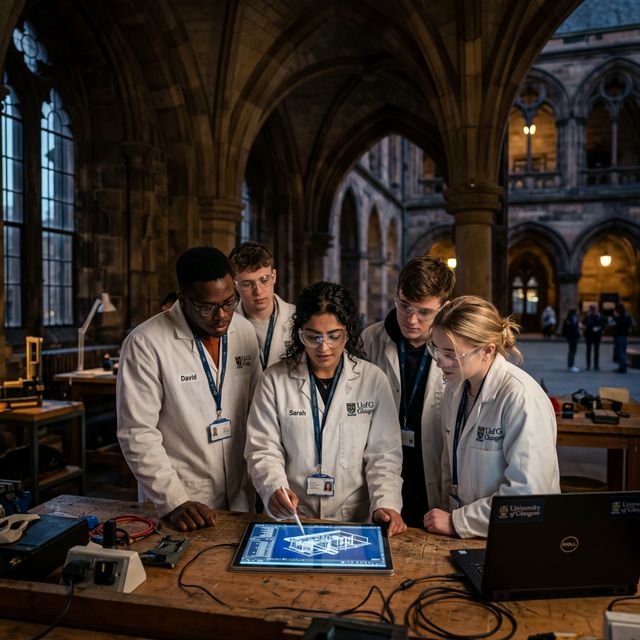
Biomedical engineering sits at the intersection of medicine and engineering, applying mathematical and physical principles to the challenges of human health. From diagnostic imaging to prosthetic limbs, from heart valves to wearable biosensors, the discipline converts biological understanding into devices, systems and treatments that improve and extend lives. It is one of the fastest-growing areas of modern engineering, driven by ageing populations, rising chronic disease burdens and rapid advances in materials science and computing. Studying biomedical engineering at the University of Glasgow, you will develop a rigorous grounding in engineering fundamentals alongside a deep engagement with anatomy, physiology and clinical contexts. You will explore topics such as biomechanics, bioelectronics, medical imaging, tissue engineering and signal processing, learning to analyse complex biological systems with engineering precision. Laboratory and project work are central to the programme, giving you hands-on experience of designing and testing solutions to real medical problems. Because this is a four-year degree with a year abroad, you will also spend time at a partner institution overseas, gaining an international perspective on healthcare technology and broadening your professional network. The ways of thinking you develop are particularly valuable: you will become skilled at translating between the language of biology and the language of engineering, working within tight safety and regulatory constraints, and iterating designs in response to clinical feedback. These habits of mind are essential in an industry where every product must be safe, effective and manufacturable at scale. Graduates go on to careers across the medical technology industry, working in roles such as device design and development, regulatory affairs, clinical engineering and quality assurance. Many join companies producing imaging equipment, surgical instruments, implantable devices or diagnostics. Others move into NHS clinical scientist and medical engineering roles, supporting the procurement and maintenance of hospital technology. A significant number continue to postgraduate study, pursuing masters or doctoral research in areas such as neural engineering, regenerative medicine or computational modelling of biological systems.
Syllabus & Modules
Typical curriculumStudent Satisfaction
National Student Survey - 10 respondents (79% response rate)
Similarly Ranked Alternatives




What comes next? 🎓
Choosing the right university starts with choosing the right school. Explore transparent, data-driven school profiles powered by official DfE statistics.
Explore Schools on WhatSchool.ai →