High Drop-out Rate Alert
20% of students drop out or transfer from this specific course. Consider asking why on an open day.
BSc Chemistry
About this course
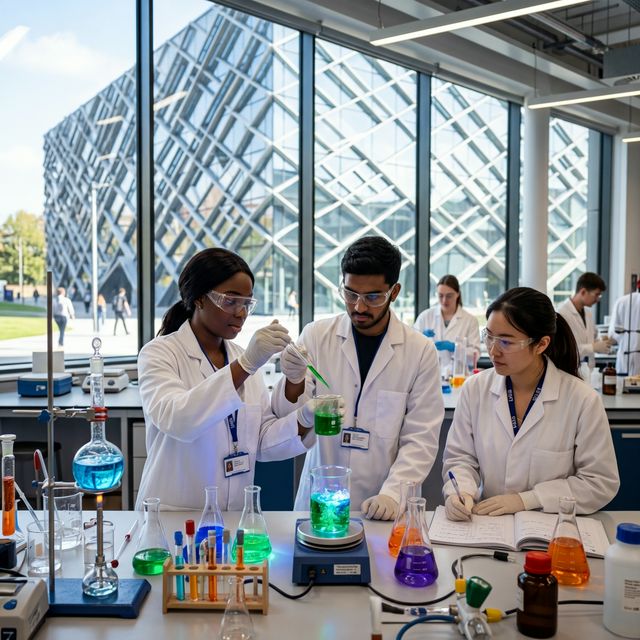
Chemistry is justifiably described as the central science, because it sits at the heart of our understanding of matter and connects to virtually every other natural science discipline. As the current description notes, it is not only the study of matter but the study of change, examining how substances are structured, how they react and transform, and how these processes underpin the physical, biological, and technological world. A thorough grounding in chemistry opens doors to work in biology, pharmaceuticals, materials science, and environmental science, among many other fields, making it one of the most versatile scientific qualifications available. At Sheffield Hallam University, this three-year full-time programme includes a foundation year, making it accessible to students who are developing the scientific and mathematical foundations needed for degree-level chemistry. The programme also includes a sandwich year and work placement, giving you substantial professional experience in a chemical, pharmaceutical, or related industrial context. Sheffield Hallam has strong connections with industry, and the work placement is a significant practical element of the programme that connects academic chemistry to the professional environments in which chemists actually work. In your academic studies, you will cover the three main areas of chemistry: organic chemistry, concerned with carbon-based compounds and their reactions; inorganic chemistry, examining the properties and reactions of metals and other elements; and physical chemistry, addressing the quantitative and theoretical aspects of chemical behaviour including thermodynamics, kinetics, and spectroscopy. Laboratory work is central throughout, developing the practical skills and professional habits that professional chemists require, from safe working practices to the design and interpretation of experiments. Chemistry graduates work across pharmaceutical and biotechnology research, chemical manufacturing, materials development, environmental analysis, food and drink science, forensic science, and academic research. The subject's breadth and the transferable analytical skills it develops also support careers in finance, consultancy, and patent law. Postgraduate study in chemistry or a related science is common for those pursuing research careers.
Syllabus & Modules
Typical curriculumStudent Satisfaction
National Student Survey - 25 respondents (82% response rate)
Similarly Ranked Alternatives



What comes next? 🎓
Choosing the right university starts with choosing the right school. Explore transparent, data-driven school profiles powered by official DfE statistics.
Explore Schools on WhatSchool.ai →