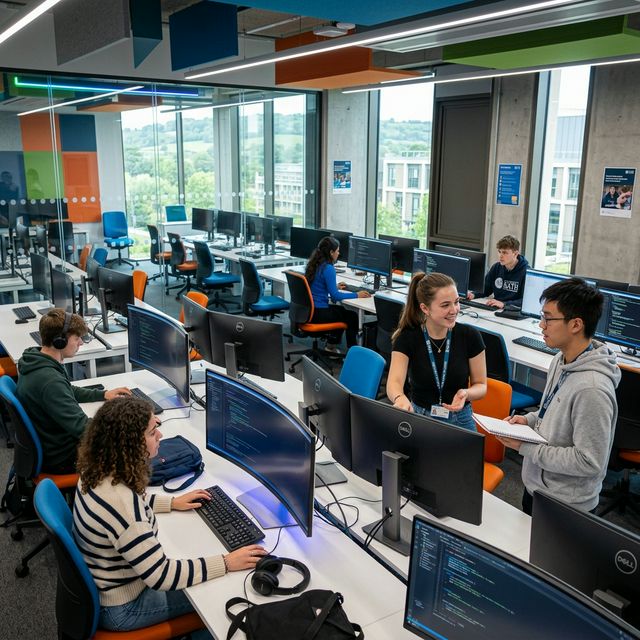
BSc Computer Science and Artificial Intelligence
About this course
Computer science and artificial intelligence together address some of the most significant technological questions of the current era. Computer science provides the foundational principles: algorithms, data structures, software engineering, systems design, and the mathematical underpinnings that make reliable computation possible. Artificial intelligence builds on these foundations to ask how machines can perform tasks that have traditionally required human intelligence, including perception, reasoning, learning, and decision-making. At the University of Bath, this three-year full-time programme integrates the two disciplines throughout the degree, rather than treating artificial intelligence as a simple add-on to computer science. You will develop your software engineering skills alongside a rigorous understanding of the theoretical and practical dimensions of AI. The programme allows you to choose your level of engagement with AI research: you can complete a standard AI project and select from a range of AI options alongside broader computer science choices, or you can undertake an extended research-focused AI project for a deeper scholarly engagement with the field, subject to academic conditions and supervisor agreement. This flexibility means the programme can accommodate students whose primary interest is in applied AI development as well as those drawn more towards research. Graduates of this programme are well placed for careers in one of the fastest-growing areas of the technology sector. Software engineering, machine learning engineering, data science, AI research, robotics, and systems architecture are all natural destinations. Financial services, healthcare, media, defence, and technology companies of all sizes are actively recruiting people with this combination of skills. Many graduates also pursue postgraduate study in computer science, artificial intelligence, machine learning, or robotics, building on their undergraduate training to develop deeper expertise and contribute to academic or industrial research.
Syllabus & Modules
Typical curriculumStudent Satisfaction
National Student Survey - 135 respondents (87% response rate)
Similarly Ranked Alternatives

What comes next? 🎓
Choosing the right university starts with choosing the right school. Explore transparent, data-driven school profiles powered by official DfE statistics.
Explore Schools on WhatSchool.ai →