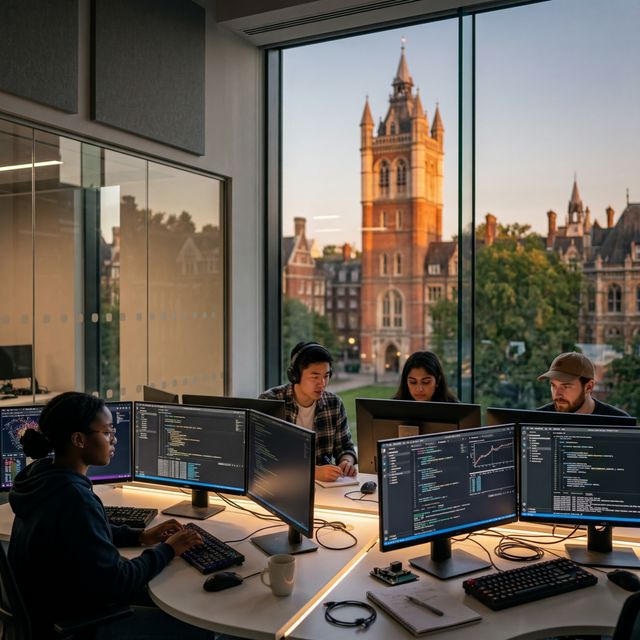
MEng Computing (Visual Computing and Robotics)
About this course
Visual computing and robotics sits at an exceptionally productive intersection within computer science, combining the study of how computers process, generate and understand visual information with the engineering of autonomous systems that can sense, reason and act in physical environments. Visual computing encompasses computer graphics, image processing, computer vision and animation. Robotics draws on this alongside artificial intelligence, control theory, mechanical engineering and sensor technology to create systems that can operate independently in complex real-world settings. Together, these fields are driving some of the most significant technological developments of the present decade, from autonomous vehicles and surgical robots to immersive virtual environments and visual inspection systems. At Imperial College London, this four-year full-time programme is grounded in the principle that computing is a creative and wide-ranging subject, one that requires sound underlying principles and logical thinking to design and build systems that really work. You will develop rigorous foundations in mathematics, algorithms, data structures, programming, systems and theory, alongside specialist study in computer vision, graphics, machine learning, robotics, perception and autonomous systems. Imperial's exceptional research reputation in both computing and robotics means you learn in an environment where the boundaries of the field are being actively advanced. Graduates of visual computing and robotics programmes are sought by technology companies working on autonomous systems, computer vision, gaming and interactive media, healthcare technology, manufacturing automation, space and defence. Career roles include computer vision engineer, robotics engineer, graphics programmer, machine learning engineer, research scientist and technical specialist. Imperial graduates are highly regarded by employers in competitive fields internationally. Further study at master's or doctoral level in robotics, computer vision, machine learning or computer graphics is a natural progression for those drawn to research or advanced specialist careers.
Syllabus & Modules
Typical curriculumStudent Satisfaction
National Student Survey - 145 respondents (70% response rate)
Similarly Ranked Alternatives
What comes next? 🎓
Choosing the right university starts with choosing the right school. Explore transparent, data-driven school profiles powered by official DfE statistics.
Explore Schools on WhatSchool.ai →