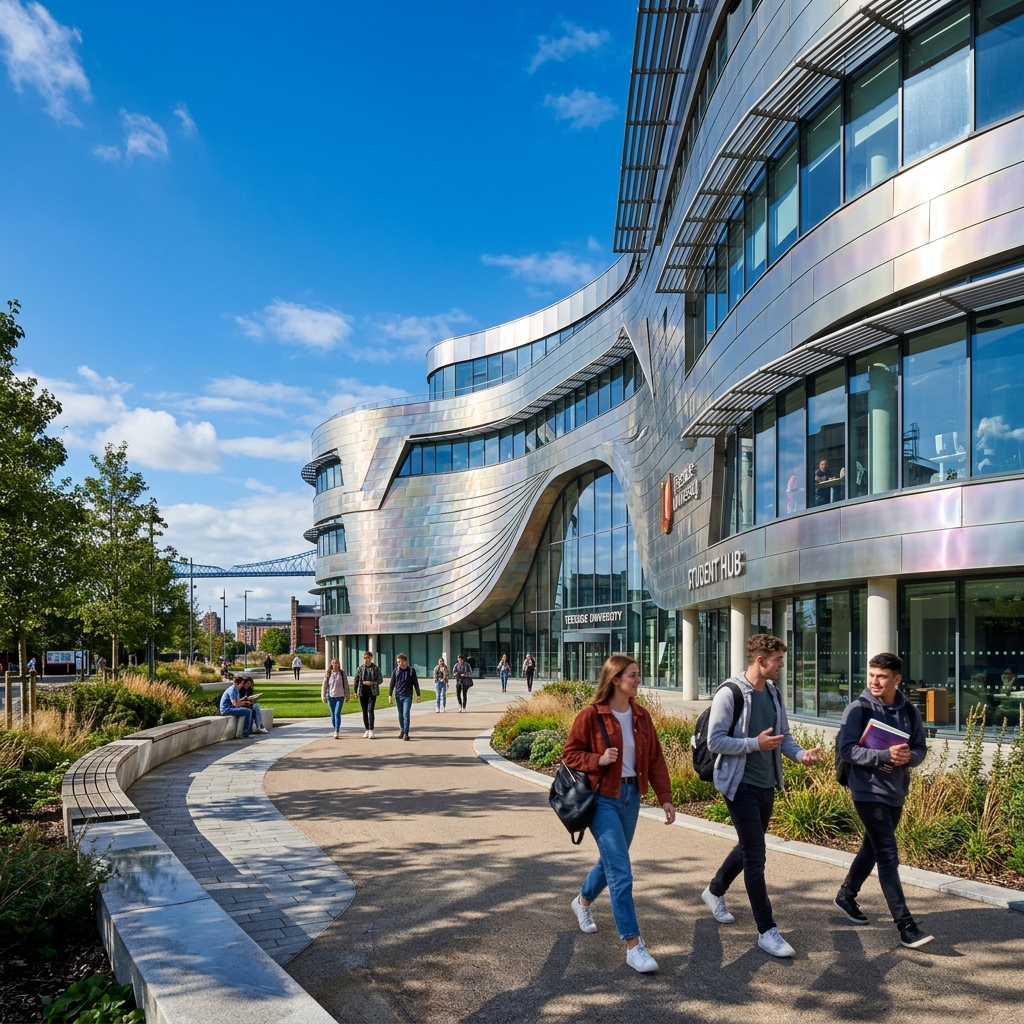
BA Music Production
About this course
Music production is the craft and science of creating recorded sound, encompassing the creative, technical, and collaborative processes through which music is conceived, recorded, mixed, and delivered to audiences. It draws on acoustics, digital audio technology, music theory, arrangement, and the creative decisions about sound design, dynamics, and texture that determine how a recording feels and how it connects with listeners. As the music industry has evolved with the growth of streaming, social media, and independent artist platforms, the role of the music producer has become both more technically sophisticated and more central to the creative process. At Teesside University, this three-year full-time programme develops the skills needed for professional music production through both individual practice and collaborative project work. As the current description reflects, you will enhance your skills in teamworking, communication, project management, and negotiation through collaborative work on creative projects in response to subject-specific briefs, mirroring the professional reality of music production which almost always involves working with artists, engineers, musicians, and other creative collaborators. You will develop technical proficiency in digital audio workstations, recording techniques, mixing and mastering, sound design, and the software tools central to modern music production, alongside the musical and artistic understanding that allows you to make creative decisions that serve the music. The programme includes a sandwich year and work placement, giving you the opportunity to gain experience in a professional studio, label, or music technology context. This practical exposure is valuable in a sector where professional connections and a strong portfolio of work are central to career development. Graduates from music production programmes pursue careers as music producers, recording engineers, mixing and mastering engineers, audio post-production professionals, sound designers for film and games, music supervisors, and in artist management and music industry roles more broadly. Many also develop portfolio careers that combine production work with music education or live sound. Postgraduate study in music technology, sound design, or music is an option for those wishing to develop specialist expertise.
Syllabus & Modules
Typical curriculumStudent Satisfaction
National Student Survey - 65 respondents (82% response rate)
Similarly Ranked Alternatives




What comes next? 🎓
Choosing the right university starts with choosing the right school. Explore transparent, data-driven school profiles powered by official DfE statistics.
Explore Schools on WhatSchool.ai →