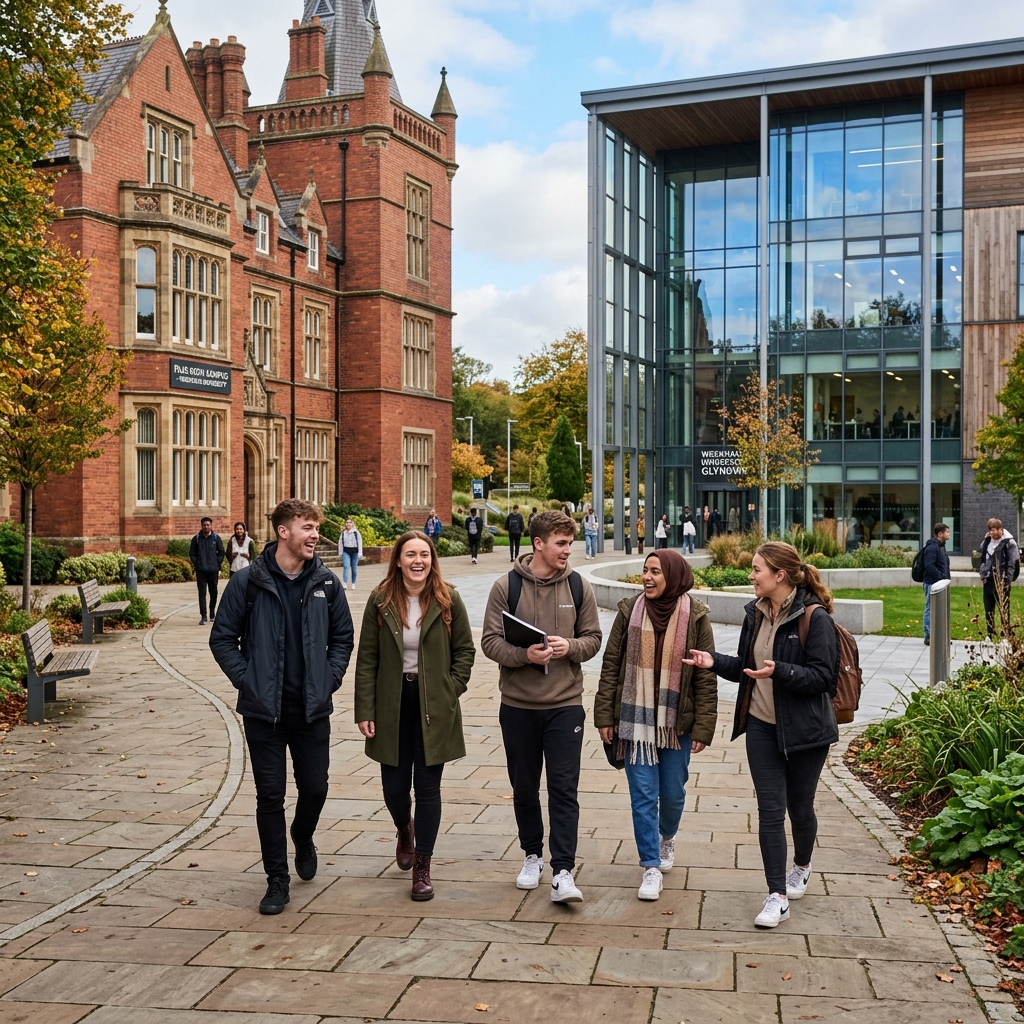
BSc Software Engineering
About this course
Software engineering sits at the heart of the modern world, providing the rigorous methods and technical knowledge needed to design, build, and maintain the complex digital systems that organisations depend on every day. Unlike general programming, software engineering treats the development of software as a disciplined process, drawing on principles from computer science, project management, and systems thinking to deliver reliable, scalable, and maintainable solutions. As demand for high-quality software continues to grow across every sector, professionals who can navigate both the technical and organisational dimensions of development are increasingly sought after. On this programme, delivered part-time at Wrexham University, you will explore the full software development lifecycle, from requirements gathering and design through to testing, deployment, and long-term maintenance. You will study software architectures and learn to evaluate design decisions against real-world constraints such as performance, security, and cost. Quality assurance and testing methodologies feature prominently, giving you the skills to identify defects systematically and improve software reliability. Project management principles are woven throughout, helping you coordinate complex work within teams and respond to changing requirements. The course includes a foundation year, which ensures you build the mathematical and computational foundations needed before progressing to more advanced study. A sandwich year and work placement give you direct industry experience, allowing you to apply your learning in a professional environment and develop the practical judgement that employers value. Research skills are also developed during the programme. You will learn to investigate emerging tools, languages, and practices, and to assess their relevance and suitability for particular contexts. This positions you to adapt throughout your career as technologies evolve rapidly. Graduates of software engineering programmes typically move into roles such as software developer, systems analyst, software architect, quality assurance engineer, and technical project manager. Many work across sectors including finance, healthcare, government, retail, and technology. Some graduates go on to postgraduate study or research, particularly in areas such as distributed systems, artificial intelligence, or software quality. The analytical and problem-solving skills the programme develops also open pathways into consultancy, product management, and technology leadership.
Syllabus & Modules
Typical curriculumStudent Satisfaction
Missing Satisfaction Data
The university has not shared complete student satisfaction records for this specific degree metrics block. You may want to formally explore these topics with the university staff at an open day before committing.
What comes next? 🎓
Choosing the right university starts with choosing the right school. Explore transparent, data-driven school profiles powered by official DfE statistics.
Explore Schools on WhatSchool.ai →